UnderstandSeptember 29, 2026
🍋 The real training for aging happens with your parent
Exercise and diet alone do not prepare you for aging: the real training happens alongside people who have already grown old.
Read the guide
Behavior that wears you down is not proof that your parent's personality is changing: international research reads it as a need, a discomfort, a pain.
Yvan Keyna · Published on August 26, 2026
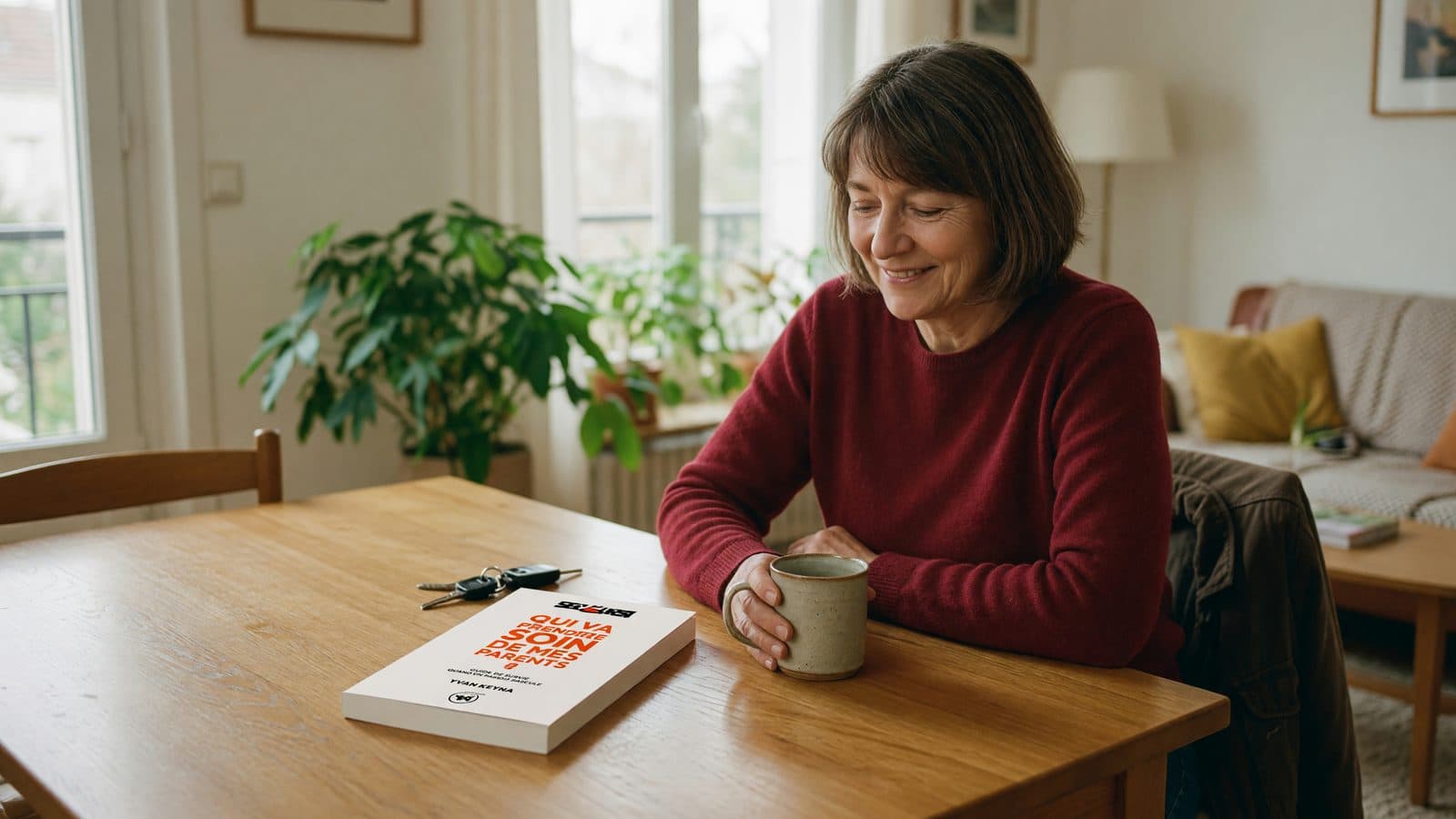
He criticizes the meal, the drive over, the way you parked the car. You have already tried to reason with him, to distract him, to change the subject — and nothing has lasted beyond a single visit.
Behavior that wears you down — criticism, complaints, repeated anger — is not proof that your parent is becoming someone else. International research often reads it as an expression: a need, a discomfort, sometimes a pain no one has noticed. Changing is not a decision you can make for your parent — but you can change what you understand of it.
Most of the advice you get targets his behavior. This article comes at the problem from the other end: what you can really change is not him — it is what you understand of what he is expressing, and what you expect from a visit.
What this article does not do: it makes no diagnosis, never says what your parent in particular is expressing, and promises no easing of tension. It explains a mechanism documented by international research, and it gives steps with their real cost — not a guaranteed result.

Question 1
Specialists never label a person: they describe a behavior. This is not a matter of politeness — a survey shows it is also the word family members themselves prefer to hear.
A panel of experts in geriatrics and geriatric psychiatry published a four-step approach to a change in behavior in the Journal of the American Geriatrics Society. The first step is to describe it like a scene: what exactly happens, when, where, what comes before and what comes after. 👉 the Journal of the American Geriatrics Society article
The second step is to look for a cause, starting with physical causes — including pain. This order, describe first and then look for a cause, is what structures the whole approach.
A survey published in Age and Ageing, conducted among 229 family members — sons, daughters, spouses —, asked which words they could accept to talk about changes in their parent's behavior. "Challenging behavior" is the term 53% of them reject the most. 👉 the survey published in Age and Ageing
The words they prefer name a need. Respondents explain that a word naming a need is less accusatory, and that it pushes you to look for what the behavior expresses — two effects a label never has.
The World Health Organization points the same way: a label creates the image of a dependent person before anyone has even looked at them. Its own report therefore chose to stop using these words. The book Help! Who's Going to Take Care of My Parents? uses a similar wording: "our parents' difficult behavior." 👉 the World Health Organization report
Question 2
Part of the specialized research reads a change in behavior as the expression of an unmet need — pain, discomfort, surroundings that no longer suit the person. These are leads for a professional to assess, never a diagnosis you make yourself.
One research model proposed reading a change in behavior not as a flaw in the person, but as their way of expressing a need they can no longer put into words any other way. 👉 the unmet needs model A review published in the BMJ takes up this framework and adds one point: it is crucial to explore a medical cause first — an infection, dehydration, and pain. 👉 the review published in the BMJ
This reading comes mostly from research focused on memory disorders, and does not carry over as is to every older person. A study of 89 very old people shows that physical discomfort often came with repeated complaints, and was hard to spot even for trained professionals — hence the value of a dedicated assessment. 👉 the study of 89 very old people
For a person without memory problems, a cohort of 888 people aged 70 and over who came to the emergency department shows something else: among those whose complaints were vague, more than one in two later received a precise diagnosis. A fuzzy sign deserves to be assessed, because it often hides a clear one. 👉 the emergency department cohort
Question 3
You may have already tried to reason with him, to distract him, to contradict him — and nothing lasted beyond a single visit. You may have left angry at yourself for being short with him, or ashamed that you no longer really want to go back.
Yvan Keyna says it in chapter 4.7 of his book Help! Who's Going to Take Care of My Parents?, in a passage that turns the question around: "We now come to something very powerful and freeing: why try to change your parent when you're the one who's hurting?"
"You will not be able to change your parent, unless they decide to. The only thing you will be able to change is your perception of the situation," the book goes on. This is what the book Help! Who's Going to Take Care of My Parents? explores. 👉 Help! Who's Going to Take Care of My Parents?
This is more than a turn of phrase. A synthesis of 84 studies measured what taking care of an aging parent actually involves, compared with not doing it: more stress, more discouragement, less of a sense that you are managing. 👉 the synthesis of 84 studies This is not a personal weakness: it is a measured gap, across thousands of people.
Question 4
A trait that wears you down today often existed before, in a more subtle form. The book puts it this way: "He hasn't changed: he is simply showing another side of himself." This is not a consolation: it is a way of not feeling that you have lost someone who is still there.
This idea matches what the four-step approach mentioned above documents: a behavior is understood by putting it back in context — what has changed around the person, not only within them. A move, a loss, a new pain, a disrupted routine can bring out a trait that was already there.
This is what the book Help! Who's Going to Take Care of My Parents? explores in the same passage — without the person having become someone else. 👉 Help! Who's Going to Take Care of My Parents?
Question 5
You have three real levers: your perception of the situation, the setting of the visit, and what you expect from it. A simple method, documented for years, helps you look at what is happening objectively: write down the time, the place, what comes before and what comes after a behavior, over a few days.
Changing what you expect from a visit can also mean changing what you do during it: spending the time on a shared activity rather than on a conversation that fizzles out. That is the idea behind the book Let's Remember Together — 250 games to play together with an aging parent, with no promise of any effect on memory or mood. 👉 Let's Remember Together
The so-called "ABC" approach — what comes before, the behavior, what comes after — was studied in a Cochrane review, across 18 trials conducted mostly with families. The authors remain cautious: it is still too early to judge whether it works. What is established: the method exists, and it has been tested. 👉 the Cochrane review of the ABC approach
A small randomized study compared a diary kept by 78 family members for seven days with a simple spoken account given from memory. The diary brought up more difficulties than the account alone, on the first day as on the last. 👉 the randomized study of the diary kept by family members In practice, you keep this record for a week or two: the studies themselves used seven days, and it is not a fixed length.
Before interpreting a behavior, a review from the international pain association points out one simple thing: pain that is not put into words does not go away, it comes out through behavior — irritability, agitation. That is why observation scales exist, so that a professional can assess pain without waiting for a sentence. 👉 the international pain association's review
Question 6
You are under no obligation to stay until the end of a visit that exhausts you. Cutting it short, coming back another day, getting support for yourself: these are recognized steps, not an admission of failure.
The World Health Organization says it plainly: caring for a loved one "can be overwhelming and weigh on the health and well-being of the person doing it." 👉 the WHO fact sheet For this reason, it designed an entire program meant not for the person being cared for, but for the one who cares for them — with a module called "taking care of me."
This program, free to download, has been adapted in some forty countries. A scientific commentary states honestly that a large trial showed no difference from usual care on its main measures. 👉 the scientific commentary on the iSupport program The same commentary adds that human contact matters more than a manual alone — an honest nuance, more useful than a promise.
Support groups for family members have existed for a long time, and they have been studied: a synthesis of 30 trials confirms that they exist. Getting support sometimes costs money — a professional charges a fee, a support group is often free: look into what is available near you. This is also what the book Help! Who's Going to Take Care of My Parents? explores. 👉 the synthesis on support groups 👉 Help! Who's Going to Take Care of My Parents?
Question 7
Six steps are within your reach, each with its real cost.
Nothing guarantees that even one of these six steps will change the next visit. But none of them requires you to wait for your parent to change first.

Author: Yvan Keyna
| # | Fact cited | Link |
|---|---|---|
| 1 | DICE approach (Kales, Gitlin, Lyketsos, expert panel, J Am Geriatr Soc, 2014): describe the behavior (what, when, where, before, after), then look for a physical cause, including pain | the Journal of the American Geriatrics Society article |
| 2 | Survey (Wolverson et al., Age and Ageing, 2022, 229 family members): "challenging behavior" is the least accepted term (53%), words naming a need are preferred | the survey published in Age and Ageing |
| 3 | Global report on ageism (WHO, UN DESA, UNFPA, OHCHR, 2021): age-related labels trigger stereotypes of dependence | the World Health Organization report |
| 4 | The book Help! Who's Going to Take Care of My Parents? itself uses the wording "our parents' difficult behavior," in a chapter devoted to the subject | — |
| 5 | Unmet needs model (Algase et al., American Journal of Alzheimer's Disease, 1996) | the unmet needs model |
| 6 | Reference review (Kales, Gitlin, Lyketsos, BMJ, 2015): explore a medical cause first, including pain, described as "crucial" | the review published in the BMJ |
| 7 | Study (Cohen-Mansfield et al., Psychiatry Research, 2015, 89 people): physical discomfort often comes with verbal complaints, and is hard to spot even for professionals | the study of 89 very old people |
| 8 | Cohort (van Dam et al., European Journal of Internal Medicine, 2023, 888 people aged 70 and over): a vague complaint receives a precise diagnosis in more than one case in two | the emergency department cohort |
| 9 | Official excerpt from the book, chapter 4.7: "why try to change your parent when you're the one who's hurting?" and "you will not be able to change your parent, unless they decide to" | Help! Who's Going to Take Care of My Parents? |
| 10 | Meta-analysis (Pinquart & Sörensen, Psychology and Aging, 2003, 84 studies): measured gaps in stress and discouragement among people who care for an aging loved one | the synthesis of 84 studies |
| 11 | Official excerpt from the book, chapter 4.7: "he hasn't changed: he is simply showing another side of himself" | Help! Who's Going to Take Care of My Parents? |
| 12 | Cochrane review (Moniz-Cook et al., 2012, 18 trials): "ABC" approach, a documented method, effectiveness judged not established by the authors | the Cochrane review of the ABC approach |
| 13 | Randomized study (Jayalath et al., 2016, 78 family members, diary kept for 7 days): the written diary brings up more observations than an account from memory | the randomized study of the diary kept by family members |
| 14 | IASP review (Achterberg et al., Pain Reports, 2020): pain not expressed in words comes out through behavior; observation scales exist | the international pain association's review |
| 15 | WHO fact sheet: caring for a loved one "can be overwhelming"; existence of a "taking care of me" module | the WHO fact sheet |
| 16 | WHO iSupport program (2019), adapted in some forty countries (commentary in Lancet Reg Health Eur, 2024); a large trial showed no difference from usual care | the scientific commentary on the iSupport program |
| 17 | Meta-analysis (Chien et al., International Journal of Geriatric Psychiatry, 2011, 30 trials): documented existence of support groups for family members | the synthesis on support groups |
| 18 | The book Help! Who's Going to Take Care of My Parents? also covers getting support for yourself | Help! Who's Going to Take Care of My Parents? |
| 19 | Reference to the book Let's Remember Together — 250 games to play together with an aging parent, illustrating the idea of changing what you do during a visit, with no promise of any effect on memory or mood | Let's Remember Together |
International research often reads behavior that wears you down as the expression of a need, a discomfort or a pain no one has noticed, rather than as a change in personality. Only a professional can say what is going on in a specific case.
Changing is not a decision you can make for them. What you can change is what you understand of what they are expressing, and what you expect from a visit.
Make the visit shorter, change the time of day, come with someone else, choose an activity rather than a conversation. None of these steps promises that things will ease, but they change what the visit costs you.
Exercise and diet alone do not prepare you for aging: the real training happens alongside people who have already grown old.
Read the guideA drug approved in Germany may be missing from the French register at the same dose: that is not a ban, it is a different legal framework.
Read the guideThe years of decision your parent no longer has, you still have: three often-neglected tests, daily movement, a routine rather than a goal.
Read the guide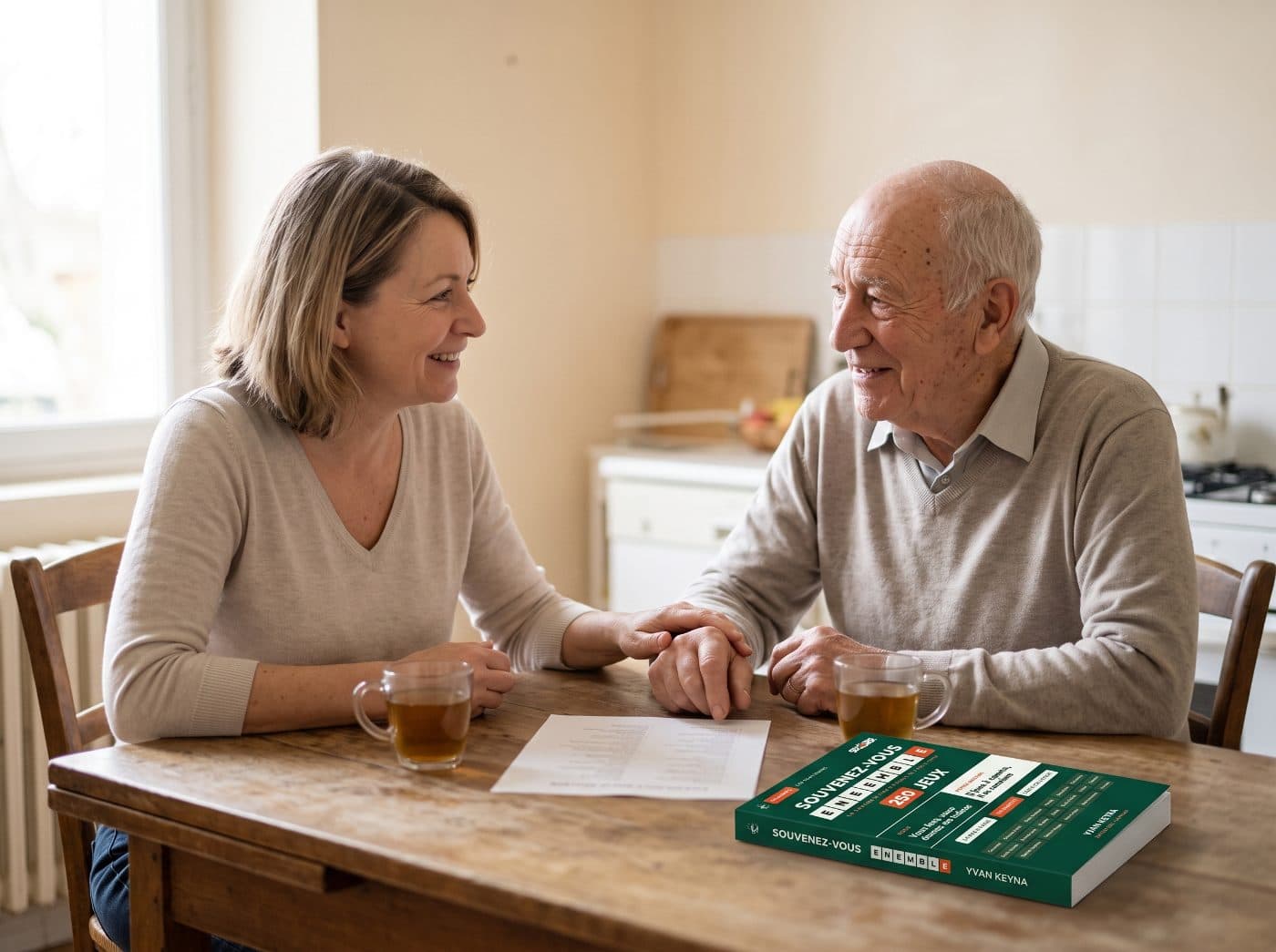
Leave your email: the next game comes to you, no need to look for the QR code.